Power generation gaskets. Cooling loop gaskets. Backup power sealing.
Explore TEADIT sealing materials for your cooling and power connections. Compare options, review the application, and prepare a product-specific quote.
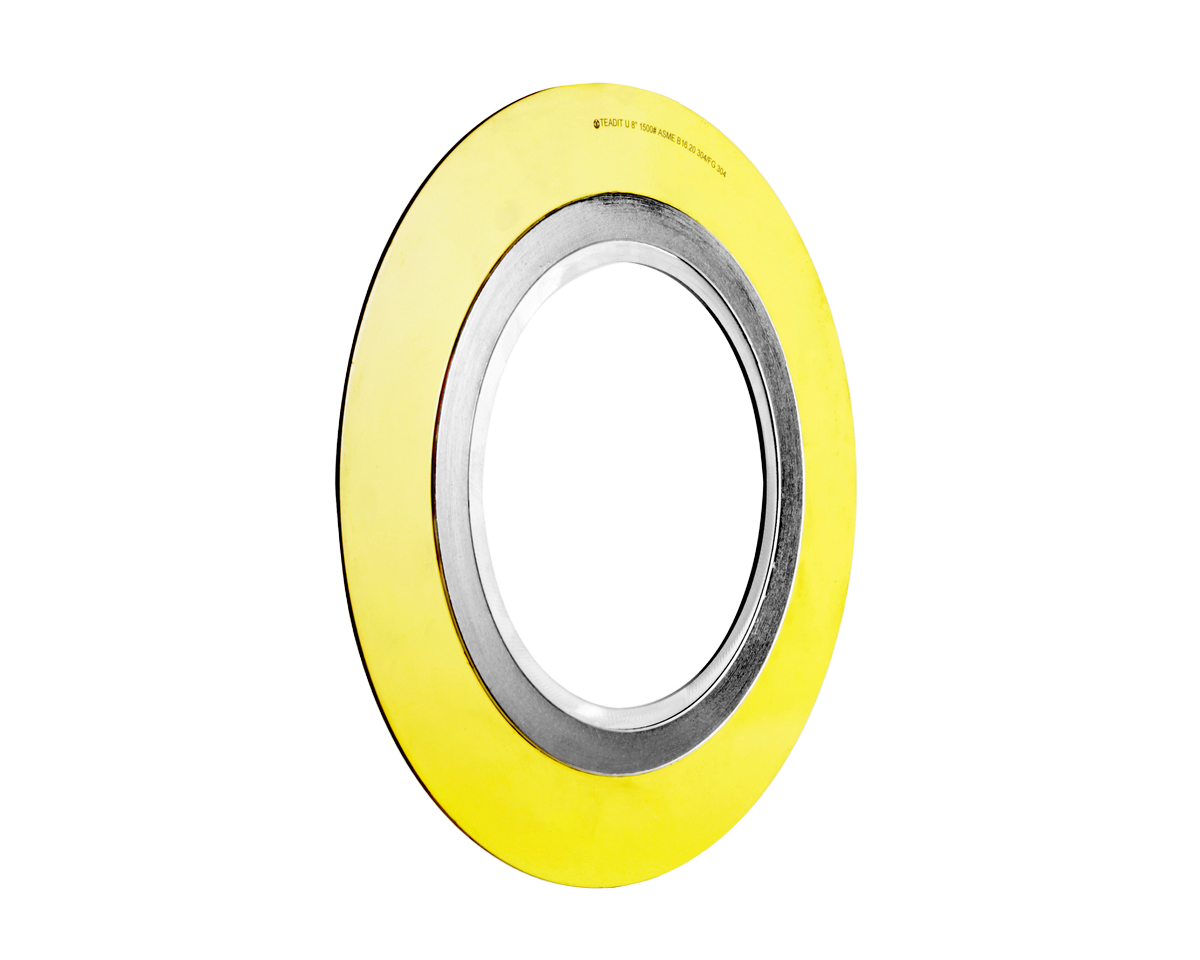
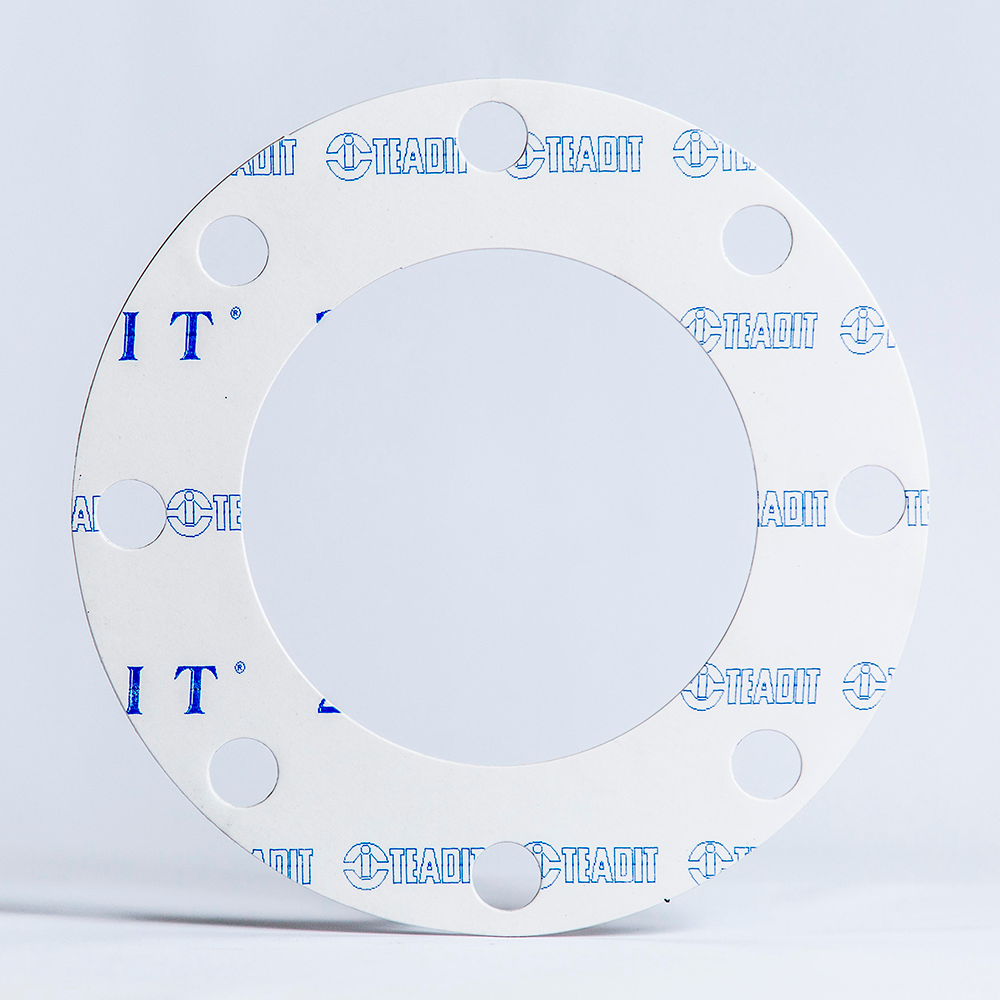
TEADIT 913M / SWG familySpiral-wound gasketBackup power, high temperature
Cooling loops Backup power Fragile flanges Connection integrity Application engineering Cooling loops Backup power Fragile flanges Connection integrity Application engineering Cooling loops Backup power Fragile flanges Connection integrity Application engineering Cooling loops Backup power Fragile flanges Connection integrity Application engineering
Products
TEADIT sealing products for data center applications
With millions of gaskets installed, TEADIT brings extensive sealing experience to data center infrastructure. From cooling loops to power generation and backup power, we combine gasket technology with application-engineering expertise to help teams address demanding sealing requirements.
Explore gaskets, packing, isolation kits and expansion products by system—from facility water and liquid cooling to power generation. Confirm fluid, temperature, connection design and operating conditions with TEADIT before ordering.
What are you sealing?
Explore our productsChoose a system above to see relevant sealing products, or search the full catalog below.Mappings are application candidates, not guarantees. Confirm fluid, operating conditions and connection or equipment requirements with TEADIT before ordering.
Multi-directional expanded PTFE sheet
TEADIT 24SH
Gasket sheet manufactured from pure, multi-directionally expanded PTFE. Its conformability supports review for fragile flange surfaces and demanding purity requirements. Included in the data-center liquid-cooling and heat-exchanger selections.
Data-center application
CDU skids, chilled-water systems and heat-exchanger connections.
Typical service / media
Water, glycol mixtures and coolant additives, subject to formulation review.
Why it belongs
Conforms to imperfect surfaces and low-load connections. Also worth reviewing for spiral heat exchangers where surface conformity matters.
Application examples, not compatibility approvals. Confirm fluid formulation, operating limits and connection or equipment requirements with TEADIT.
Enter a manufacturer to browse its listed TEADIT sealing candidates, or enter a grade, product code or product family to narrow the search. The lookup combines reference-chart entries with TEADIT-supplied data-center application comparisons across gaskets, isolation kits, packing and expansion products.
Explore TEADIT sealing materials
Data center gasket support
TEADIT Gaskets for Datacenter Connections
Replacing a gasket, specifying cooling connections or investigating a leak? Discuss your application with TEADIT and review material candidates before you order.
Start from the flange, the fluid and the operating conditions.
Useful to have: Flange type, fluid, temperature, pressure
02
Price replacement gaskets
Work from dimensions and quantity to a product-specific quote.
Useful to have: Size, standard or drawing, quantity
03
Review a sealing problem
Look at material, flange and bolt load factors together.
Useful to have: Current gasket, flange condition, load
I
Your connections, your need
Tell us whether you are replacing, specifying or troubleshooting a connection.
What do you need to do?
Choose your situation. We carry it into your quote request; you still confirm fit with TEADIT.
II
Where the heat goes
Follow a cooling loop and see which connections a gasket has to hold.
Cooling journey
Follow the heat out of the data hall
Pick a cooling method, then step along the path the heat takes. Heat crosses exchangers between separate circuits; fluids do not mix. At each stop, see where serviceable flanged connections may enter a TEADIT review.
Air removes heat from servers; chilled water carries it away through the facility.
CRAH coils exchange heat between room air and chilled water. Containment controls airflow; it is not itself a gasket application.
Reference photo for this stage. Not a connection location.
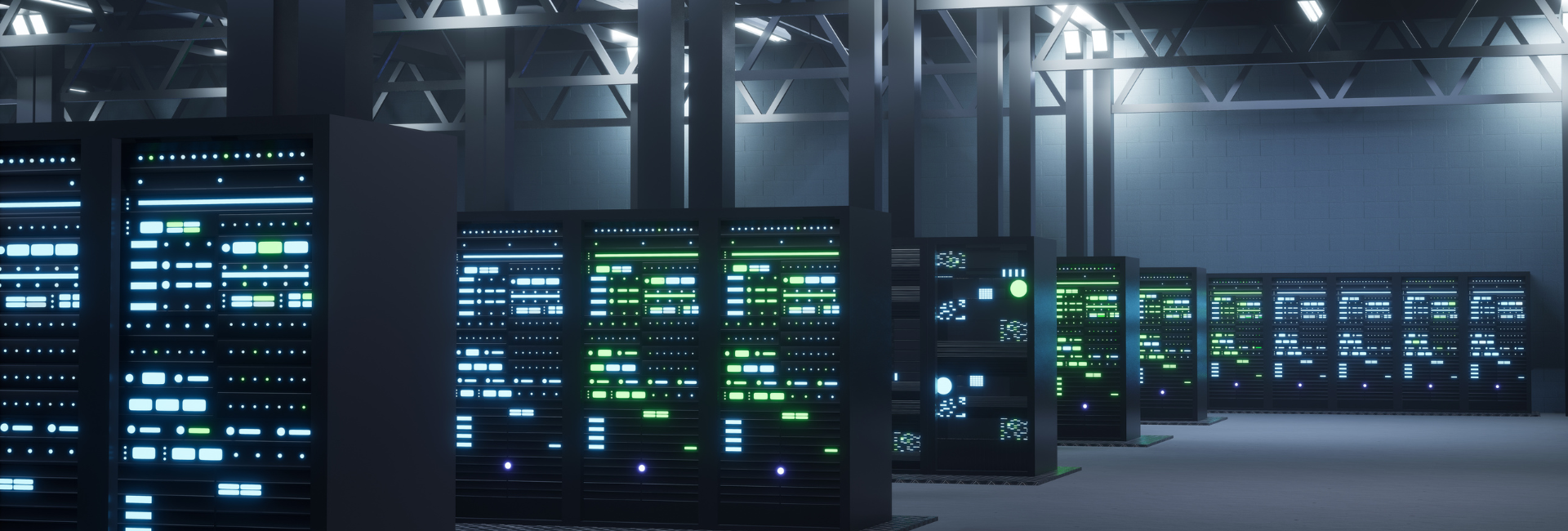
TEADIT data-hall reference. Not a cold-plate or immersion-tank detail. Source
Server fans move cooling air through the equipment. Hot- and cold-aisle containment helps keep exhaust air separate from incoming cool air.
Medium: Air in the data hall
Sealing context
Airflow management is not a piping flange-gasket application. Follow the heat to the water-side equipment to see where serviceable sealed connections matter.
Check first
Airflow distribution and containment
Cooling equipment and facility configuration
Preliminary connection-level review
Choose the flange you are actually looking at. These are candidates to review, not recommendations or approvals.
No default candidates at this stop. Airflow management is not a piping flange-gasket application. Follow the heat to the water-side equipment to see where serviceable sealed connections matter.
Cooling-method background: Dgtl Infra, Data Center Cooling: Systems and Methods. Material connections: TEADIT official product and guide data. Photographs are third-party references, not TEADIT installations or endorsements.
Connection-level guidance and backup-power systems
Where gaskets are used
Data center liquid cooling and backup power sealing
Liquid-cooled data centers rely on many flanged connections. Low-rigidity flanges cannot take heavy bolt load, so gaskets need low seating stress and creep resistance. Choose a system to see its typical connection types.
Illustrative connection types for this system. Not marked locations in the photograph.
Direct-to-chip
Liquid cooling close to the heat source
Selected connection
CDU service connections
Review serviceable flanged connections around the coolant distribution unit. Proprietary connectors and their seals must follow the CDU manufacturer’s specifications.
The webinar presents water or glycol systems serving cold plates through CDUs, heat exchangers and manifold/piping interfaces. Confirm the actual fluid in each loop.
Review before specifying
Coolant composition and purity requirements
OEM connector and seal specifications
Gasket compatibility at the available seating stress
Related products for this system
Starting points for engineering review, not recommendations for the selected connection.
All application areas
Technology Cooling Systems (TCS) Flanged connections in the liquid loops that serve the compute racks.
Facility Water Systems (FWS) Facility-side piping, heat exchangers and chillers.
CDUs, pumps and valves Coolant distribution units and the equipment around them.
HDPE and metallic pipe flanges Low-rigidity flanges need gaskets that seal at low seating stress and resist creep.
Glycol-water and UPW loops Gasket materials compatible with the coolant in service.
Backup power generation Generator, fuel and exhaust systems with high temperature and thermal cycling.
Connection inspection
Inspect a facility-water flange connection and ball valve
Rotate, section and separate generic equipment, select a component, then load a failure mechanism. Flange gasket candidates stay separate from valve internals, which follow the valve maker.
Generic geometry for component inspection—not a manufacturer drawing or design calculation. Colors identify parts, not stress. Installed equipment requires site-approved isolation and depressurization before maintenance.
Loading 3D inspection view
Drag to orbit, scroll to zoom, click a part to select. Generic inspection geometry, facility-water-side flange context.
Component
External connection
Flange gasket
Sealing element between mating faces; ring and full-face geometries differ. It must develop sufficient contact stress to seal face irregularities, then retain sealing through pressure, relaxation and thermal cycling.
Seating stress available from the bolts and flange
Creep and relaxation behavior of the material family
Actual coolant composition, not nominal fluid name
View
Flange family
Connection mechanisms · qualitative review
Baseline view. Inspect geometry and component roles with no load case highlighted.
Quote candidates for this selection
FRP, thermoplastic, lined or other limited bolt-load flanges. Candidates: CoreShield, 24SH, TF1570, pending actual coolant and flange review. This is not a universal fluid approval.
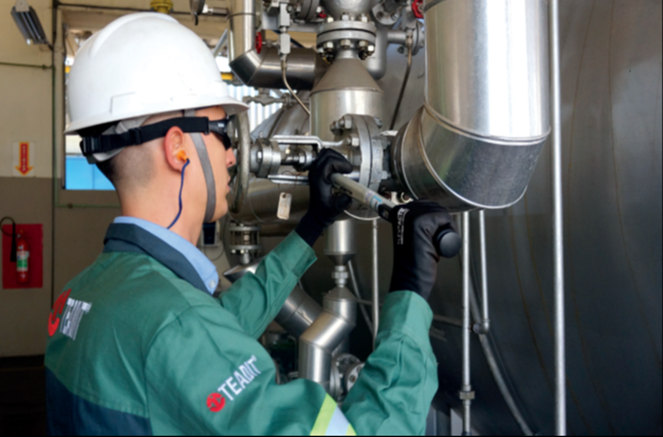
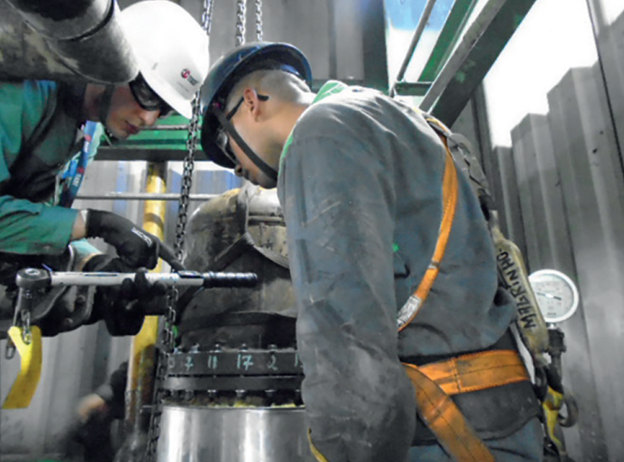
Industrial reference photograph: servicing flanged piping. Not a data-center site, CoreShield installation or valve identification.Industrial reference photograph: servicing bolted equipment. Not a data-center site, CoreShield installation or valve identification.
Explore cooling architectures and reliability insights
Webinar · Cooling architectures
The Fourth Pillar of Data Centers
How Sealing Components Impact Power, Cooling, and PUE
The webinar presents sealing as the fourth pillar supporting power, cooling and PUE. Its focus is containment and mechanical-connection integrity across the systems behind the servers.
1
Power
Generation, backup and distribution support continuous operation.
2
Cooling
Fluid systems remove heat and maintain stable operating temperatures.
3
PUE
An efficiency metric comparing total facility energy with IT energy—not a separate piece of equipment.
4
Sealing
Containment and connection integrity support the mechanical systems behind reliable power and cooling.
This is a conceptual framework, not a claim that gaskets alone determine reliability or efficiency. Source: webinar slides 11, 15, 21, 22 and 26.
Where sealing fits in each cooling approach
Fluids shown are examples from the webinar, not universal specifications. Source: slides 15, 17 and 19.
Air cooling
Fluid Air at the IT equipment; supporting cooling equipment may have fluid circuits.
Review the facility’s cooling equipment and fluid-system connections. Air cooling does not eliminate the need for sealing in the supporting mechanical infrastructure.
Rear-door heat exchangers
Fluid Water in the webinar’s example.
Evaluate heat-exchanger and supply/return connections, with fluid compatibility and pressure integrity matched to the equipment specification.
Direct-to-chip cooling
Fluid Water or glycol in the designs presented.
Evaluate CDUs, pumps, heat exchangers and manifold/piping interfaces. Specify for the actual loop chemistry, temperature, pressure and connection design.
Immersion cooling
Fluid Dielectric liquid.
Review wetted seals in the fluid circuit for the actual dielectric fluid. Single-phase and two-phase systems have different operating conditions; do not carry over a water-glycol material specification unchanged.
Source: TEADIT “The Fourth Pillar of Data Centers” webinar, slides 11, 15, 17, 19, 21–24 and 26. Content is summarized for reference; final selection requires a connection-specific engineering review.
III
Test the decision
Compare materials, weigh the energy case and check your connections before you order.
Material comparison
Compare up to three materials side by side
Service, advantage and what you still have to review. The limit is three so each column stays readable on one screen.
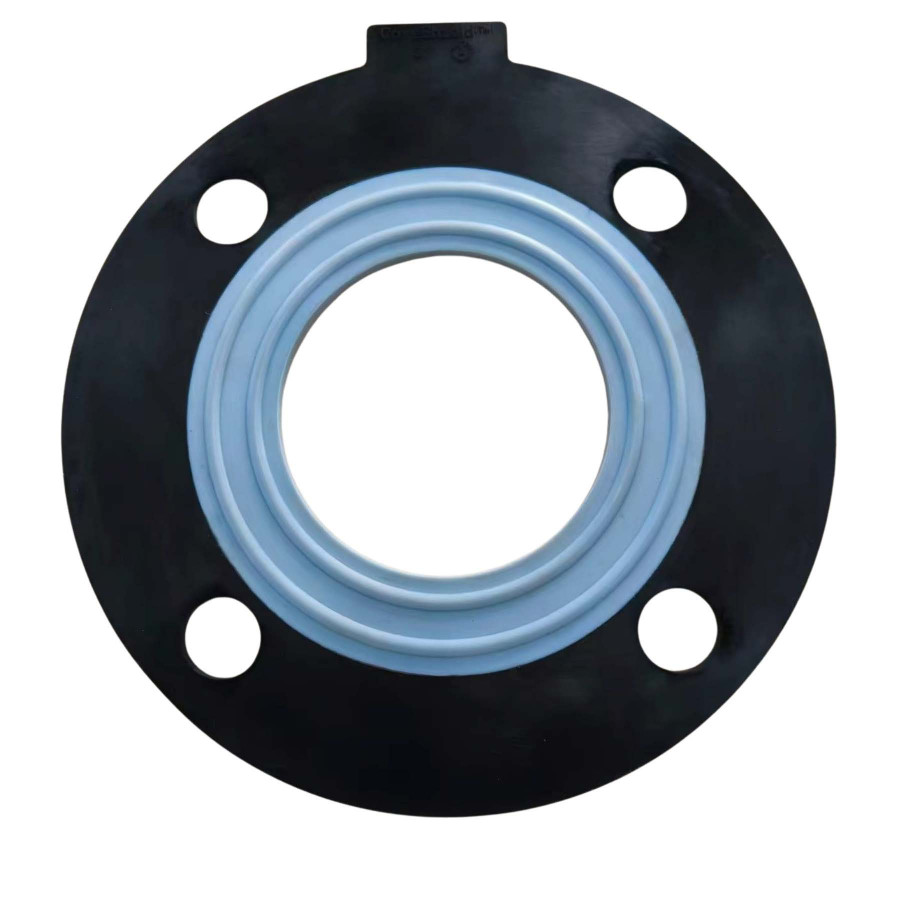
CoreShield construction and application details
2 of 3 selected.
New · EPDM core + PTFE envelope
CoreShield™
Service
Low-stress sealing at fragile flanged cooling connections in data centers: FRP, thermoplastic, lined and other limited bolt-load flange systems.
Advantage
A molded EPDM core, bonded seamless PTFE envelope and rib geometry concentrate compressive force at the sealing surface.
Review before use
Actual coolant, flange integrity, available bolt load and assembly-specific operating limits. OEM connector seals require their own specifications; typical constituent properties are not universal connection ratings.
Capacity that is kept available, instead of being lost to a leak or an unplanned shutdown, has an energy value. Put your own numbers in.
Energy over the year
8,760 MWh
Illustrative capacity value
$657,000
100% of the year in operation
Multiplication only: MW x hours x price. This is an illustrative capacity-value scenario, not measured savings and not a PUE improvement.
Source: Powering the Digital World webinar · slide 40. Actual value depends on achieved output, operating hours and electricity prices; maintenance and downtime effects are not included.
Connection-review checklist
Eight inputs to gather before you ask for a gasket
Tick each as you confirm it for a connection. Nothing is saved; reloading clears it.
0 of 8 inputs gathered
Informational only. This is a prompt for your own review, not engineering approval or a saved record. No universal torque value applies: follow connection-specific guidance.
Technical guide: material selection, compatibility and bolting
Gasket selection guide
Which gasket materials are used in data-center cooling and power systems?
TEADIT identifies the following materials for different data-center applications. Use this comparison to start a technical discussion, not as a substitute for a connection-specific engineering specification.
TEADIT gasket materials: applications and selection considerations
Low-stress, fragile-flange cooling connections in data centers, including FRP, thermoplastic and lined flange systems.
Rib geometry concentrates compressive force at the sealing surface. Confirm actual coolant compatibility, available bolt load, flange integrity and assembly-specific limits.
Explore backup-power sealing and engineering considerations
From the TEADIT webinar
Critical sealing points in data center power generation
On-site generation adds another set of mechanical systems to a data center. Alongside IT cooling, engineers must consider the fuel, cooling, lubrication and exhaust systems that keep engines and turbines operating reliably.
Source: TEADIT Mission Critical Team webinar, “Powering the Digital World: Critical Sealing Solutions for Data Centers.” The takeaways below reference the presentation’s slide numbers.
Power-generation systems: sealing points and engineering considerations
System
Typical sealing points
What to evaluate
Gas engines and turbinesWebinar slides 12 and 28
Fuel-gas connections, cooling-water circuits, lubrication lines and exhaust connections.
Review temperature, pressure fluctuations, vibration and repeated startups and shutdowns. Each sealing point has a different operating environment.
Power-plant cooling and heat exchangersWebinar slides 14, 29 and 30
Account for thermal movement, pressure differentials, water or glycol compatibility and available bolt load. Heat-exchanger connections also need to accommodate inspection and maintenance cycles.
Containment, pressure integrity and fluid compatibility are critical. Fuel-system connections require their own engineering review; a cooling-water gasket is not automatically suitable for fuel service.
Eight design factors to review before selecting a gasket
Start with the application, not a product name. These factors interact, so a change to one can change the appropriate gasket technology.
1Temperature
Minimum and maximum operating temperatures.
2Pressure
Internal pressure and pressure fluctuations.
3Process media
Fluid chemistry, concentration, pH and purity.
4Available bolt load
Bolt strength, quantity and achievable preload.
5Flange material
Material type and mechanical properties.
6Flange surface finish
Surface roughness, flatness and cleanliness.
7Thermal cycling
Frequency and severity of temperature changes.
8Leakage requirement
Acceptable leakage based on process, safety and environmental requirements.
Source: webinar slide 27, “The Eight Design Factors.” This checklist supports an engineering discussion; it does not replace a connection-specific specification.
Gross generation is not the same as net power delivered
Cooling equipment, pumps, fans, fuel systems and lubrication systems consume some of a power plant’s generated electricity. This auxiliary load reduces the net output available to the data center. The webinar explains how cooling-system degradation and leakage can increase that demand. This is a plant-performance issue; auxiliary consumption is not itself the same metric as data-center PUE.
Source: webinar slides 35–37 on auxiliary power and cooling-system performance.
Sources, reported cases and the technical record, with their limits stated.
TEADIT technical insights
How gasket sealing affects data center reliability and PUE
Reliable IT operations also depend on the cooling, power and fluid-handling systems behind the servers. These practical takeaways from our eBook and webinars explain why sealing deserves attention throughout the life of a facility.
Sealing is part of the PUE discussion
Power Usage Effectiveness (PUE) compares total facility energy with the energy used by IT equipment. Cooling, pumping and fluid-system integrity contribute to the non-IT energy load. The eBook connects leaks and pressure instability with additional pump demand and less efficient cooling. Better sealing is one part of a wider efficiency strategy—not a standalone promise of a lower PUE.
Flanges, valve interfaces, pump connections, heat exchangers and expansion components are potential leak locations. A small leak may develop below monitoring thresholds before it becomes an obvious failure. The eBook describes how persistent leakage can affect cooling efficiency, pressure stability, maintenance frequency and equipment wear.
Thermal cycling, pressure fluctuations, vibration and chemical exposure continue after commissioning. Gaskets can relax, bolt loads can change and materials can degrade in service. Selection therefore needs to consider long-term operating conditions, coolant additives, creep resistance and sealability at the available seating stress.
Installation quality matters as much as the specification
A specified gasket can still underperform when installation or handling varies. The eBook highlights improper compression, misalignment and uneven load distribution as risks. Consistent material selection, connection-specific torque requirements, installation procedures and team training help reduce the gap between the designed connection and the installed connection.
Application engineering from selection through installation and review.
Application engineering
Data center gasket selection and engineering support
Our team helps match gasket materials to the flange, coolant and operating conditions, and supports the connections through installation, system reviews and team training.
Material selection
Custom gaskets
Connection analysis
Flange management
Installation guidance
Maintenance and operations training
System reviews and leak investigation
Bolting, hoses and expansion components
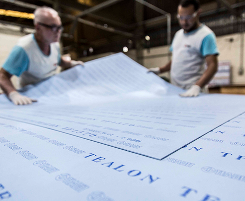
Teadit team handling Tealon sheet material.
Technical library
Sourced resources
Webinars, catalogs, the eBook, product information and technical articles. Guide links open the relevant section on this page.
TEADIT supplies gasket materials and engineered sealing solutions for data-center liquid cooling and power-generation equipment. Applications include coolant distribution units (CDUs), heat exchangers, chillers, pumps, valves, pipe flanges, and generator fuel and exhaust systems.
How do I select a gasket for an HDPE cooling-system flange?
Low-rigidity HDPE flanges require a gasket that seals at the available bolt load without excessive flange distortion. TEADIT identifies 24SH expanded PTFE for plastic and other low bolt-load applications. Final selection must account for flange geometry, seating stress, coolant composition, pressure and temperature.
Which TEADIT gasket materials are identified for water and glycol cooling loops?
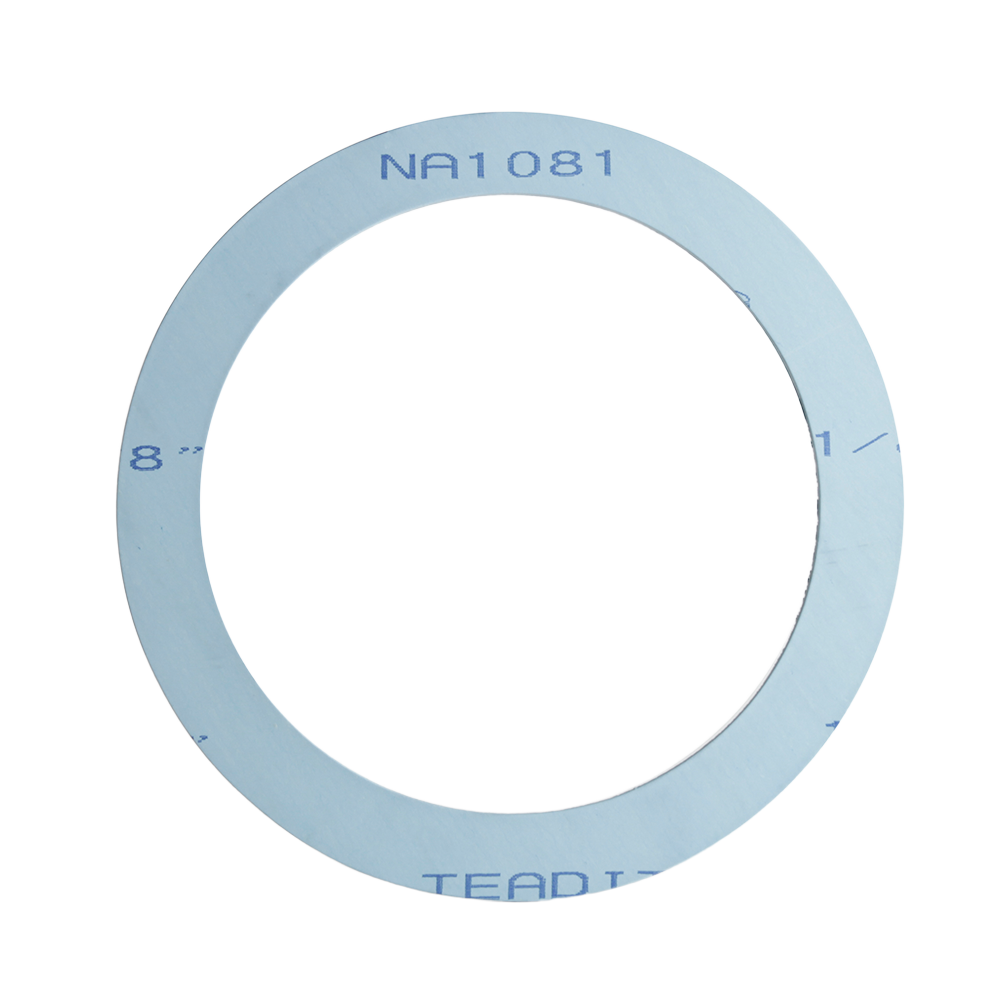
TEADIT’s data-center application guide identifies NA1081 and NA1035 compressed-fiber materials for water and glycol services. A material’s suitability depends on the glycol formulation and additives, operating conditions and flange design; compatibility should be confirmed for the specific system.
Which TEADIT gasket is identified for ultra-pure-water cooling loops?
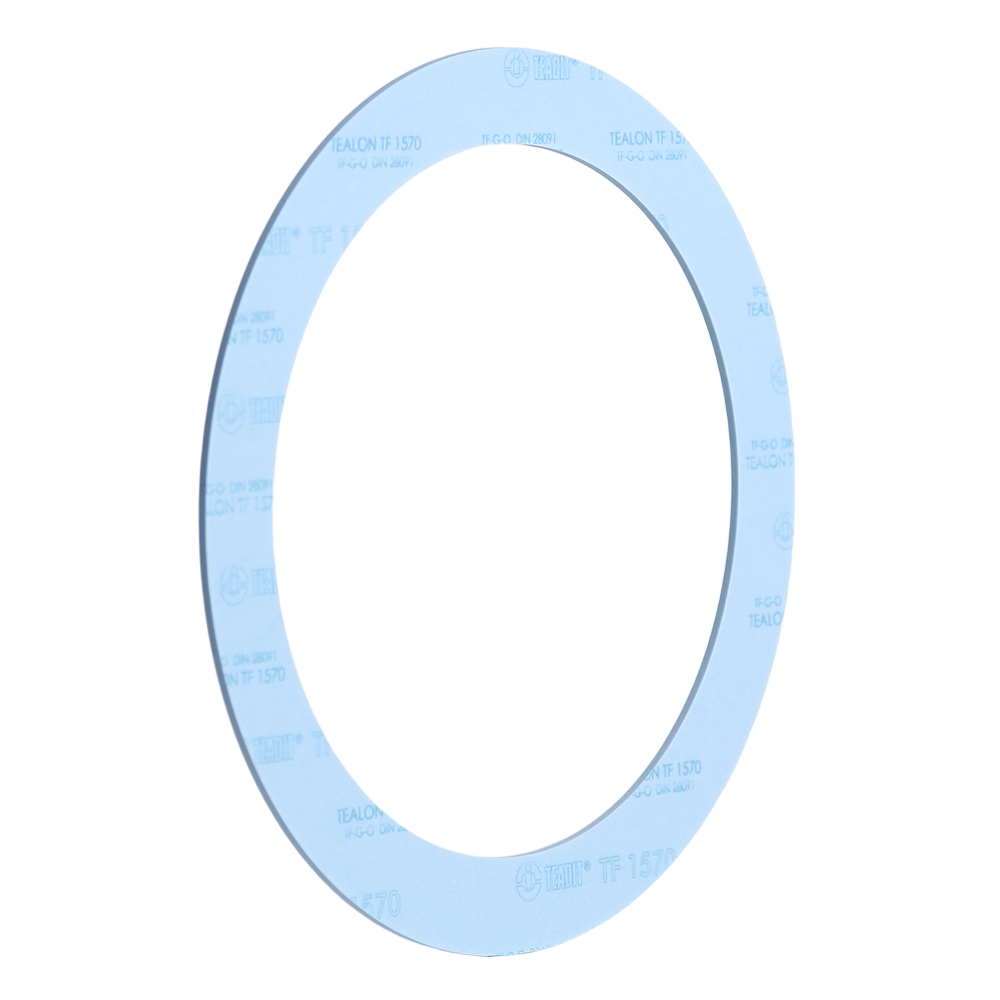
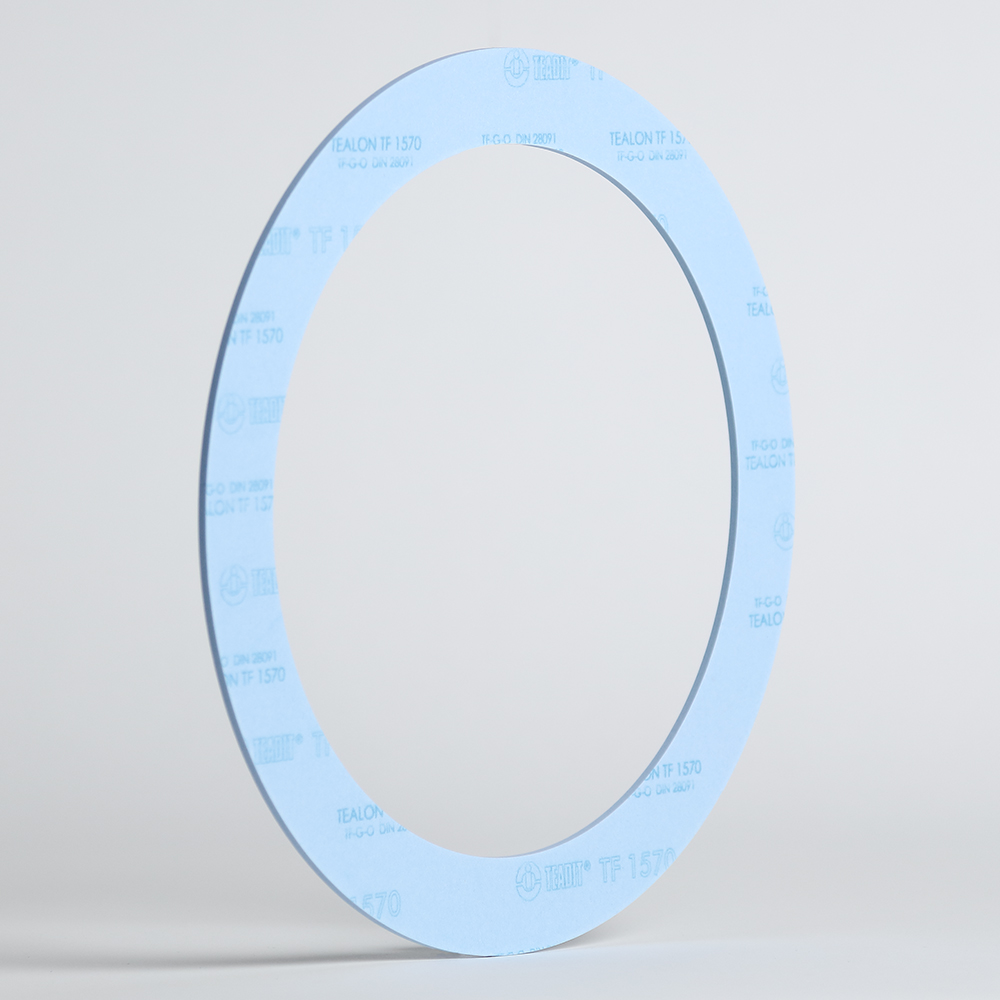
TEADIT identifies Tealon TF1570 PTFE gasketing for ultra-pure-water (UPW) loops and for metallic and non-metallic flanges. Confirm the system’s purity requirements, operating conditions and connection design with application engineering before specifying a gasket.
What is the difference between TCS and FWS in data-center cooling?
A Technology Cooling System (TCS) delivers coolant to IT equipment to remove heat. A Facility Water System (FWS) transports chilled water between facility cooling equipment and the TCS. Gasket selection must address the coolant and connection conditions in the particular loop, rather than treating both systems as identical.
Are cooling-loop gaskets interchangeable with generator or exhaust gaskets?
Do not assume that a gasket selected for a water or glycol loop is suitable for a generator fuel or exhaust connection. Power-generation equipment can impose different temperature, pressure and thermal-cycling requirements. TEADIT identifies the 913M spiral-wound gasket among its power-generation sealing solutions; each connection requires application-specific selection.
What information is needed to specify a data-center gasket?
Provide the flange material, dimensions and facing; coolant or process-fluid composition; operating and design temperature and pressure; available bolt load; and any purity or installation requirements. These inputs help an application engineer evaluate material compatibility, seating stress and connection reliability. A product name alone is not a complete gasket specification.
Power Usage Effectiveness (PUE) is the ratio of total facility energy to IT-equipment energy. TEADIT’s eBook explains that leaks, pressure instability and inefficient cooling can increase non-IT energy demand. Maintaining fluid-system integrity supports an overall efficiency strategy, but a gasket change alone does not establish a specific PUE improvement; results depend on the complete system and its operating conditions.
Why should small cooling-system leaks be addressed before an alarm occurs?
Small leaks can develop gradually and remain below monitoring thresholds. The eBook links persistent leakage with loss of cooling efficiency, pressure instability, additional pump load and increased maintenance. An absence of alarms is not proof that every connection is leak-free; inspection and maintenance should follow the facility’s approved procedures.
What happens to a gasket during thermal cycling and continuous operation?
Repeated heating and cooling, pressure fluctuations and vibration can change the mechanical conditions of a sealed connection. Gaskets may relax or lose compression, bolt loads can change, and chemical exposure can degrade materials. TEADIT’s eBook recommends evaluating performance under real operating conditions rather than considering startup conditions alone.
Why do creep resistance and coolant compatibility matter?
Creep and relaxation can reduce gasket compression over time and contribute to leakage. Coolants and their additives can also affect material durability. The eBook identifies thermal resistance, chemical compatibility and sealability under low stress as selection factors. Evaluate these together with flange design and operating conditions; no single material is suitable for every cooling connection.
Can the correct gasket still leak if it is installed incorrectly?
Yes. The eBook explains that installation variability can cause improper gasket compression, flange misalignment and uneven load distribution, even when the design specification is sound. Use the approved material, handling practices, installation procedure and connection-specific torque requirements. A universal torque value cannot be inferred from the gasket product name.
Can TEADIT help with an existing facility, not only a new data-center project?
Yes. The eBook describes support for operators, engineers and contractors designing new facilities or improving existing systems. Services include evaluating cooling and fluid systems, identifying leak risks, recommending sealing solutions, supporting installation and standardization, and training teams. Contact TEADIT to discuss a technical consultation or system evaluation and confirm the scope for your facility.
Where are sealing solutions used in on-site data-center power generation?
Gas engines and turbines rely on sealing at fuel-gas connections, cooling-water circuits, lubrication lines and exhaust connections. Supporting equipment includes pumps, heat exchangers, valves, filters, piping and expansion components. The TEADIT power-generation webinar emphasizes selecting for each connection’s operating environment rather than specifying one gasket throughout the plant.
What are the eight design factors for gasket selection?
The TEADIT webinar identifies temperature, pressure, process media, available bolt load, flange material, flange surface finish, thermal cycling and leakage requirement. These factors interact: changing one condition can change the appropriate sealing technology. Evaluate them together and confirm the final specification with application engineering.
What is auxiliary power, and why does sealing matter?
Auxiliary power is the electricity used by a power plant’s own support systems, such as cooling equipment, pumps, fans, fuel systems and lubrication systems. Net output is the generated power remaining after those internal loads. The webinar explains that impaired cooling and leakage can increase auxiliary demand and reduce net output. Plant auxiliary consumption and data-center PUE are different measures; a quantified improvement requires system-specific assessment.
How does gasket selection differ between direct-to-chip and immersion cooling?
The TEADIT webinar presents direct-to-chip systems using water or glycol and immersion systems using dielectric liquids. It also distinguishes single-phase systems, where the coolant stays liquid, from two-phase systems, where it boils and condenses. Material compatibility must be checked against the actual fluid and operating conditions in each circuit. A gasket specification for water-glycol service is not automatically suitable for a dielectric immersion fluid, and equipment-specific connector seals must follow the OEM specification.
Why does TEADIT describe sealing as the fourth pillar of data-center performance?
The webinar frames performance around power, cooling and PUE, with sealing as the supporting fourth pillar. Flanged connections, valve interfaces, pump connections, heat exchangers, hoses and manifolds help maintain containment, flow and pressure stability. Sealing performance depends on material selection, connection design and surface condition, installation practices and operating conditions. PUE remains an efficiency metric; this framework does not imply that gaskets alone determine facility reliability or energy efficiency.